



Insights and Analysis: Mortgage and Real Estate Capital Markets Update with Jeff Rosato, SVP of Capital Markets at NMB NOW.
Key Takeaways
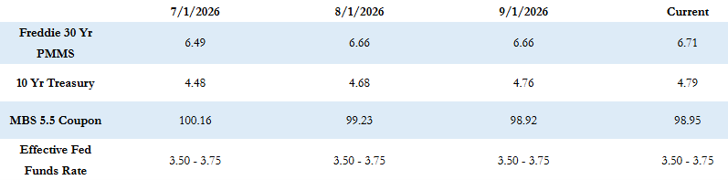
Mortgage rates and Treasury yields continued to climb, with the Freddie Mac average 30-year fixed mortgage rate reaching 6.71% and the 10-year Treasury yield closing at 4.78%, its highest level since the beginning of 2025. Persistent inflation risks, higher oil prices, geopolitical tensions, and large government borrowing needs continue to put pressure on the bond and mortgage markets. Meanwhile, August employment data came in significantly stronger than expected, with 162,000 jobs added compared to the forecast of 53,000, while unemployment remained steady at 4.1%. Markets are now closely watching upcoming Producer Price Index (PPI) and Consumer Price Index (CPI) inflation data, which will be the final major inflation readings before the Federal Reserve’s upcoming FOMC meeting and interest rate decision. With current Fed Funds futures indicating increased odds of a 0.25% rate hike, mortgage rates are expected to remain elevated as investors assess inflation, economic growth, employment conditions, and Federal Reserve policy.
Here’s a look at this week’s update on the major bond market indices, scheduled Federal Reserve meetings, upcoming market-moving economic data releases, and general bond market trends.
Bond Market Indices
“Unless inflation convincingly trends lower or labor market and economic conditions deteriorate significantly, it’s likely we will see a Fed rate hike next week or at the October FOMC meeting.”
Market Overview and Rate Trends
Mortgage rates remain elevated, and volatility persists in the bond markets. The Freddie Mac average 30-year fixed rate is at 6.71% and was up by 5 basis points compared to the prior week. That puts the maximum APR this week for 30-year fixed-rate loans at roughly 8.21% (6.71 + 1.50).
The 10-year Treasury yield closed at 4.78%, which was up by 6 basis points for the week.
Treasury yields and mortgage rates continued to climb. Inflation risk, geopolitical risk, and large government borrowing needs have been the main drivers.
Inflation, Employment and Economic Growth
The 10-year Treasury closed at 4.78%, which is the highest level since the beginning of 2025. Renewed hostilities in Iran have pushed oil prices back up over $90 per barrel. Higher oil and energy prices are the main source of renewed inflation pressures that the Federal Reserve must balance against resilient economic growth.
August employment data surprised to the upside, showing 162,000 jobs added compared to the expectation of 53,000. The unemployment rate held steady at 4.1%.
Fresh inflation data is also due with the Producer Price Index (PPI) and Consumer Price Index (CPI). This will be the last inflation data released before the Fed’s FOMC meeting and interest rate decision. The fresh inflation data will matter more to the Fed than employment data in making its rate decision, so these releases will be very important.
Federal Reserve Outlook
The odds for a Fed rate hike at the upcoming FOMC meeting have increased. Currently, the Fed Funds futures market is showing 70% odds that the Fed will hike rates by 0.25%, which is up from about 50% at the beginning of the prior week.
Unless inflation convincingly trends lower or labor market and economic conditions deteriorate significantly, it’s likely we will see a Fed rate hike at the upcoming meeting or at the October FOMC meeting.
Economic Calendar and Market Drivers
Aside from the upcoming inflation data, the economic calendar is light, with no other major market-moving reports expected.
The upcoming PPI and CPI reports will be closely watched as investors and the Federal Reserve evaluate the current inflation environment and determine the potential path of monetary policy.
Current Market Conditions
Mortgage rates are expected to remain elevated at current levels.
MBS prices are down slightly by about 5–10 basis points compared to where they closed at the end of the prior week, while the 10-year Treasury is up a basis point to 4.79%.
Looking Ahead
Mortgage and bond markets will continue to respond to inflation data, employment conditions, economic growth, Federal Reserve policy expectations, energy prices, government borrowing needs, and geopolitical developments. With upcoming inflation reports providing the final major data points before the Fed’s next interest rate decision, markets will be watching closely for signs that could influence the direction of interest rates.
As market conditions continue to evolve, homebuyers, homeowners, and real estate professionals should focus on the broader economic trends and work with their mortgage professional to understand how changing rates and market conditions may affect their individual goals.
Stay tuned each week for the latest economic data, Federal Reserve developments, bond market trends, and mortgage market insights shaping the housing market.